




Urgent Care EHR Buyers' Guide
Urgent care centers operate in a fast-paced environment where efficiency and speed are paramount. Patients come expecting prompt, high-quality treatment without the long delays of an ER visit, so your EHR system needs to keep up.
The right urgent care software can support rapid documentation, real-time patient tracking, and seamless billing, ensuring you capture revenue and deliver great care even at high volumes.
Features to look for
Selecting an EHR for urgent care means finding a system that can handle on-demand, high-volume care. Here are some must-have features and capabilities to prioritize:
- Rapid patient intake and triage: Look for tools that speed up registration and triage, like self-check-in kiosks or automated intake forms. Fast intake keeps patient flow moving and reduces wait times; insurance eligibility checks should be instantaneous to avoid billing surprises. Efficient front-desk workflows are critical when nearly every patient is a walk-in or new patient to the clinic.
- Urgent care-specific templates and quick charting: An effective system will come with pre-built templates for common acute conditions (sprains, infections, minor injuries, etc.) so providers can chart notes with a few clicks. Complaint-driven charting logic is especially useful as it guides documentation based on the patient’s chief complaint. The goal is to chart most routine visits in a minute or two, not spend valuable time typing notes.
- Integrated diagnostics (labs, imaging, eRx): Urgent care often involves on-the-spot labs or X-rays. Your EHR should integrate with lab and radiology systems for electronic orders and results, as well as include e-prescribing for medications. Strong interoperability (e.g. connectivity to local hospitals’ systems or health information exchanges) is a plus for care coordination
- Occupational medicine support: Many urgent care centers also handle occupational health services (like pre-employment physicals, DOT exams, drug screens, workers’ comp cases). An urgent care EHR should support occ med workflows like specialized templates for those exams, and the ability to bill employers or manage workers’ comp claims. If you plan to offer employer services, ensure the EHR can handle employer contracts, custom forms, and reporting for those needs.
- Billing and revenue cycle efficiency: As above, your facility likely deals with a mix of insurance, self-pay, and workers’ comp. Your EHR should automatically generate claims, verify insurance in real time, and support coding for urgent care scenarios (including the proper evaluation & management coding so you don’t under-bill). Features like built-in coding engines and rules can help ensure accurate charges and reduce denials. Also, look for the ability to save credit cards on file and send automated balance reminders, which can speed up collections.
- Patient engagement and experience: To stand out in on-demand care, your software should help create a smooth patient experience. Online scheduling and check-in (for clinics that allow appointments or want to let patients 'get in line' remotely), digital intake forms on tablets, and a patient portal are all valuable. After the visit, features like automated appointment reminders, follow-up instructions, and patient satisfaction surveys can enhance care and drive return visits.
Scalability and multi-location support
If you run or plan to run multiple urgent care sites, ensure the EHR can scale to multi-location operations. This means supporting a centralized patient database (so patients are recognized across all your clinics), multi-site scheduling, and enterprise reporting that lets you analyze metrics per clinic or across the organization.
Cloud-based solutions are typically easiest to scale – adding a new location is simpler when software is delivered via the web, without needing new servers at each site.
Cloud EHR software has become the norm in urgent care for its convenience and reliability; it lets providers access the EHR securely from anywhere (e.g. to finish notes from home or check results on the go). Most of the leading urgent care EHRs are cloud-based, offering secure data hosting and regular backups automatically.
That said...
If you have specific security policies or unreliable internet, you might consider vendors that offer on-premise deployments or hybrid models. Just be aware that on-premise systems will involve higher upfront costs and IT overhead. In general, cloud is preferred for urgent care due to lower maintenance and easy updates, whereas on-premise might only make sense for large enterprises or those with unique compliance needs.
Ease of use and fast implementation
Urgent care staff need to learn the system quickly to avoid slowdowns. Prioritize an EHR with an intuitive, user-friendly interface and strong training/support from the vendor. Some systems tout the ability to go live in days rather than months.
Consider vendors that offer on-site training or a dedicated implementation team to tailor the system to your workflows. Also, check whether the EHR supports mobile device use (e.g. iPad charting apps or mobile dictation), which can improve provider satisfaction and flexibility on busy days.
Top Urgent Care EHR solutions
The urgent care EHR marketplace includes a mix of specialized vendors and broader ambulatory EHR platforms adapted for urgent care. Below are several leading solutions that urgent care operators often consider, along with their key strengths:
Experity Health
Front-desk staff use an urgent care EHR to check in a patient. A system like Experity streamlines registration and insurance verification, reducing wait times for walk-in patients.
Formed from the merger of DocuTAP and Practice Velocity, Experity is widely recognized as a premier urgent care-specific EHR and practice management suite thanks to its singular focus is on on-demand care centers
Why it stands out:
- The system offers urgent care–tailored workflows designed for high patient volumes. Charting includes complaint-driven templates, reportedly handling about 80% of common urgent care visits in under a minute with minimal clicks.
- Multiple staff can document on the same chart simultaneously with real-time updates, so nurses and physicians can work in parallel without waiting on each other.
- Occupational medicine support: It includes templates and billing tools for employer-paid visits and workers’ comp cases.
- On the practice management side, Experity has built-in insurance verification, credit card on file capability, and automated text reminders for patient balances to streamline billing and collections.
Note: Some users note that because Experity is so specialized, it may not integrate deeply with hospital systems, and occasional performance hiccups have been reported on user forums. Still, it remains a dominant player in urgent care clinics due to its speed and focus.)
Veradigm
Veradigm is the new branding for Allscripts’ ambulatory EHR division. Allscripts has long been used in many clinical settings, including urgent care facilities associated with hospitals.
Why it stands out:
- Strong interoperability and scalability: Veradigm is known for its ability to integrate with other systems. It can connect smoothly with labs, imaging, and larger hospital EHR systems if your urgent care needs to feed data into a health system.
- Provides customizable urgent care templates and has a robust orders/results interface, which suits an urgent care setting that does in-house labs or X-rays.
- Powerful analytics and reporting tools, which can help larger urgent care groups track performance and clinical quality metrics.
- Allscripts products have traditionally been client-server or hosted, but Veradigm now offers cloud-based options and subscription pricing.
Note: It may be more system-intensive to implement for an independent urgent care (compared to lighter cloud systems).
However, its interoperability strengths make it a contender if integration with a wider health network is a top priority.
Tebra
Born from the combination of the Kareo/PatientPop platforms, Tebra focuses on ease of use and affordability.
For an urgent care that doesn’t need a lot of frills, Tebra can handle your day-to-day operations without unnecessary complexity
Why it stands out:
- Popular independent urgent care clinics or startup practices where budget is a big factor; pricing tends to be moderate, and you avoid paying for extra modules you won’t use.
- The interface is user-friendly and cloud-based, so you can use it anywhere.
- It offers all the essential functions (appointments, charting, e-prescribing, billing, and basic patient engagement) in an integrated platform known for being intuitive and easy to learn.
- Offers a patient portal and engagement tools like reminders, but it isn't as advanced as some larger systems.
Note: Tebra is cloud/SaaS only. One thing to consider is that because it’s designed for simplicity, larger multi-site urgent care operations might outgrow it in terms of reporting or customization. But for an urgent care center that wants a reliable, straightforward EHR/PM solution at a reasonable price, Tebra is a strong option.
OptiMantra
OptiMantra may not be as famous as some above, but it has been gaining traction, especially among urgent care centers that offer diverse services (urgent care plus wellness or integrative medicine).
The cloud-based platform has gained traction in part due to its intuitive design and customizable charting that adapts to varied needs.
OptiMantra positions itself as a modern, easy-to-use EMR/PM that can handle urgent care’s speed while also allowing growth into other services without adding separate systems
Why it stands out:
- Flexibility and all-in-one design. It supports key workflows from routine urgent care visits to employer screenings and telehealth sessions in one platform.
- Key features include fast patient intake, SOAP note templates for common urgent care visits, integrated e-prescribing, and seamless billing and revenue cycle tools.
- Integrates with services like Fullscript (for supplements), Rupa Labs, and Quest (for lab orders), which are embedded directly into the chart notes.
- Strong customer support and prompt, personalized responses.
Note: While the base cost is considered reasonable, some essential or desired features (e.g., certain text reminders, upgraded telehealth options) may require additional payment.
AdvancedMD
AdvancedEHR from AdvancedMD is a cloud-based EHR and practice management solution that targets outpatient clinics, including urgent care facilities. It is known for its cloud-first, modular flexibility (accessible via browser or mobile apps), which means no local servers and easy access anywhere
Why it stands out:
- It includes telemedicine integration and mobile tools out of the box, so urgent care providers can conduct virtual visits or use iPads for charting if desired.
- Modularity:Clinics can choose only the features they need (e.g. you could start with EHR and scheduling, and add the billing module or patient engagement module later).
- The patient room tracking feature helps staff see which exam room each patient is in and how long they’ve been there, which is useful for managing flow and ensuring no one gets overlooked.
- Makes it easier to track clinical quality measures (CQMs) and handle programs like MIPS, which may appeal to urgent care clinics participating in Medicare programs.
Note: Due to its high level of customizability and comprehensive features, the software may have a steeper learning curve for new users, though in practice, users report that AdvancedMD’s intuitive interface and unified patient engagement (secure messaging, reminders) make daily workflows smoother.
Key takeaways:
The right software will support quick patient visits, integrate with labs/imaging, and aid with smooth billing and follow-up, all of which means happier patients, a more productive staff, and a healthier bottom line for your clinic.
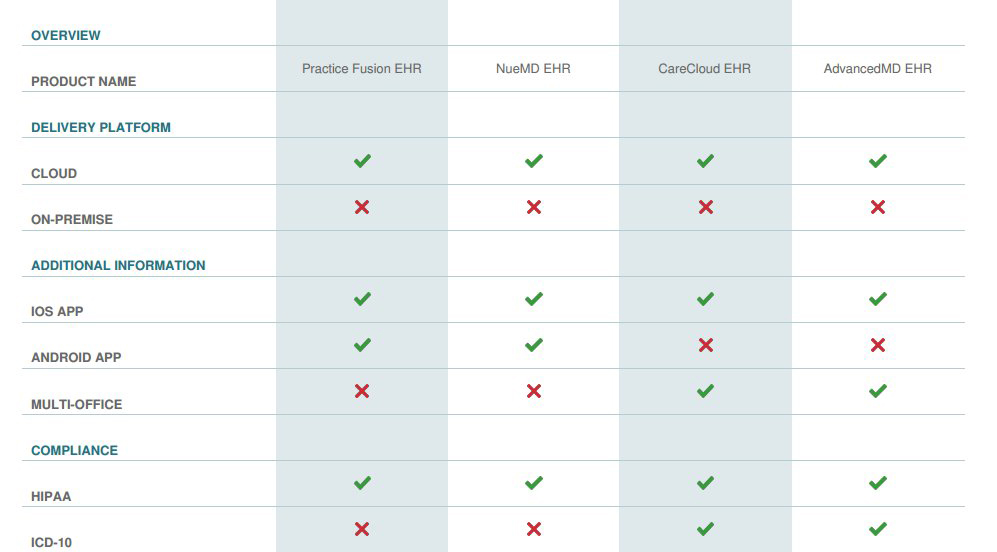
Take your time to evaluate the options, ask for client references or case studies, and don’t hesitate to schedule demos of your shortlisted systems (which you can build with the free comparison tool above).