
Integrating EHR and medical billing: three challenges
Integrating separate EHR and medical billing systems presents significant challenges. While technical issues are a concern, internal hurdles can be equally disruptive. Here are three key obstacles practices must overcome for successful integration.
1. Billing-friendly EHRs
Even if a practice did its homework on EHR systems, it may not have considered what the system meant for its medical billing processes. Although some systems offer an integrated medical billing system, too, the strength of the medical billing system may be limited. Practice managers need to consider the billing capabilities needed to perform everyday tasks.
A "billing-friendly" EHR allows providers to efficiently build detailed charts, essential for accurate medical claims. This foundation is key to seamless billing operations.
Without such a system, practices face the added burden of extensive customization and complex integration, requiring significant time, money, and external expertise. To avoid these hurdles, prioritize an EHR system that includes a medical billing module.
2. Data migration
Data migration presents a serious technical challenge. Moving patient information from old systems (paper or electronic) to new ones can be daunting. Without full data access, both medical providers and patients can face frustration, especially when medical history is needed for care or billing.
If old or new visit details aren't properly entered into a billing-friendly EHR, the medical billing system can't pull information for claims or insurance reviews. This can delay or prevent payment.
Therefore, focusing on an effective data migration strategy, prioritizing which data to enter, and establishing an internal entry process is crucial for a smooth transition.
3. Training
Everyone involved (from the front desk to providers and billing staff) needs to understand the process and information flow. While new technology can be intimidating, proper training helps employees adapt.
Clear communication between departments is key. When staff understand how their input affects the next step, they're more likely to be accurate. For example, accurate appointment and insurance details from front-end staff help with scheduling and billing. Providers must know how their data entry impacts billing; incorrect codes or descriptions can lead to denied claims or poor patient care.
Ultimately, an integration is only effective if people are trained and willing to use the system correctly.
In summary
Challenges will arise when integrating EHR and medical billing systems; there really is no avoiding it, but by selecting the best EHR for your billing needs and being wary of these challenges, the integration may just go that little bit smoother.
Further recommended reading: Compare general surgery EHRs with billing integration

Free white paper
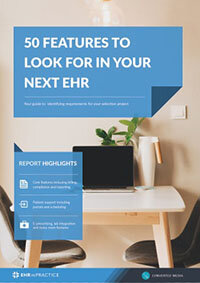
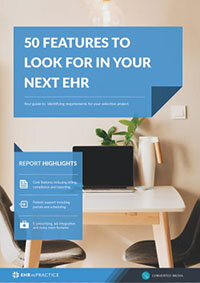
50 features to look for in your next EHR
A comprehensive guide to EHR features and how they can benefit your practice
Related articles
-

The important features of EHR in HIPAA compliant medical billing
Gaining HIPAA compliance in your medical billing can be challenge, but the correct EHR can make t...
-

Introducing "Actions": The AI-Powered Tool That’s Transforming Primary Care Workflows
70% of clinicians are reporting better focus & engagement with their patients thanks to Elation H...
-

How to compare EHR medical billing modules
With the majority of EHR systems now supporting medical billing, what points of comparison can be...